


Couple of weeks was bottling time.
Those are always intense days here. Everyone involved, hands moving, eyes focused, a rhythm that only happens a few times a year. It’s a moment where you feel the work of the vineyard coming together, finally finding its place inside the bottle.
Now, just a few days later, our new wines are ready to start their journey. And with summer around the corner, I couldn’t think of a better moment to share them with you.
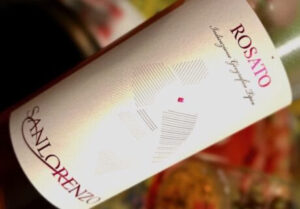
The first is our Sangiovese Rosato 2025.
I’ve always liked rosato with a bit more structure. Something that still feels fresh, but doesn’t disappear in the glass. This vintage goes in that direction. It keeps the brightness you expect for warm days, but with a little more depth, something that makes you want another sip… and maybe another glass.
It’s a wine I like to open at the beginning of a meal and keep on the table longer than expected.
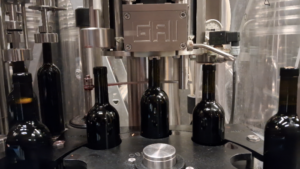
If you look closely at one of the photos, you might notice a small pressure gauge on the corking machine, next to the Gai label. It’s not just a detail. It measures the vacuum created inside the bottle at the moment of closure.
Right before the cork is inserted, a valve opens to create a slight vacuum between the wine and the cork. This step is essential to avoid pressure building up inside the bottle, which over time could push wine into the cork and create potential issues. It’s a technical detail, almost invisible, but crucial for preserving the wine.
Right after filling, the bottle is closed. In Montalcino, Brunello must be sealed with natural cork, but even within this requirement there is a wide range of quality. For our wines, we choose only top-grade, certified corks, in order to minimize the risk of cork taint and to protect the wine as it evolves in the bottle. From this moment on, its life begins in a different way.
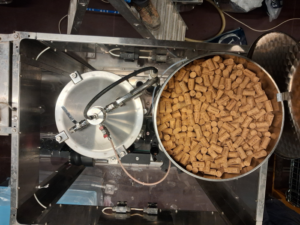
Another aspect you don’t see, but that makes a real difference, is what happens during filling. The entire process takes place under nitrogen. The filling chamber is saturated with this inert gas, protecting the wine from any contact with oxygen.
A small device moves up and down into the bottles just before corking, that piece has a double function: it adjusts the fill level and, at the same time, adds a small amount of nitrogen. This means that the space between the wine and the cork is not air, but nitrogen.
These are technical details, yes. But they are also part of how we carefully protect the wine from anything that could alter it too soon. In the end, this too is part of our work: guiding it through time, without forcing it.
After bottling, the wine needs time again. Not only to rest, but also to evolve. Bottle aging plays an important role, especially for Sangiovese, helping to soften the tannins and bring more harmony to the wine. Tannins are a key element of our Brunello, giving structure and supporting its long aging potential, so this phase is something we take very seriously.
In Montalcino, the regulations require a minimum of four months of bottle aging before release. We like to bottle age our Rosso di Montalcino as well, produce a wine yes fresh and fruity, but smoothen out from time as well. Time, once again, is part of the process.
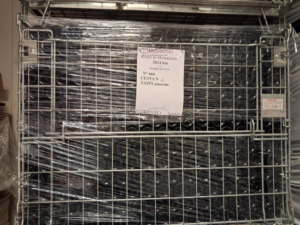
You might notice something missing. The bottles are not labeled yet. This step comes later, closer to release, allowing us to follow the wine a little longer before presenting it.
Bottling is often considered just a technical phase, but for us it is also a moment we share. During these days, everyone is involved. I am here, together with my sister and Ivan, working side by side. It becomes, in a way, a moment of teamwork that brings us even closer to what we are creating.
It’s the moment where the wine leaves our hands and begins its own journey. From here, it will travel, be opened somewhere else, at someone else’s table.
I hope you enjoyed this piece of insider content of a very important moment in the life of the vintner, and invite you as usual to come visit us if you have the chance to visit Montalcino.
Meanwhile, from our family to yours, our warmest wishes for a joyful Easter, with the hope that a bottle of SanLorenzo might find its place on your table.
See you soon,
Luciano Ciolfi
SanLorenzo
Click here to book your tasting!